
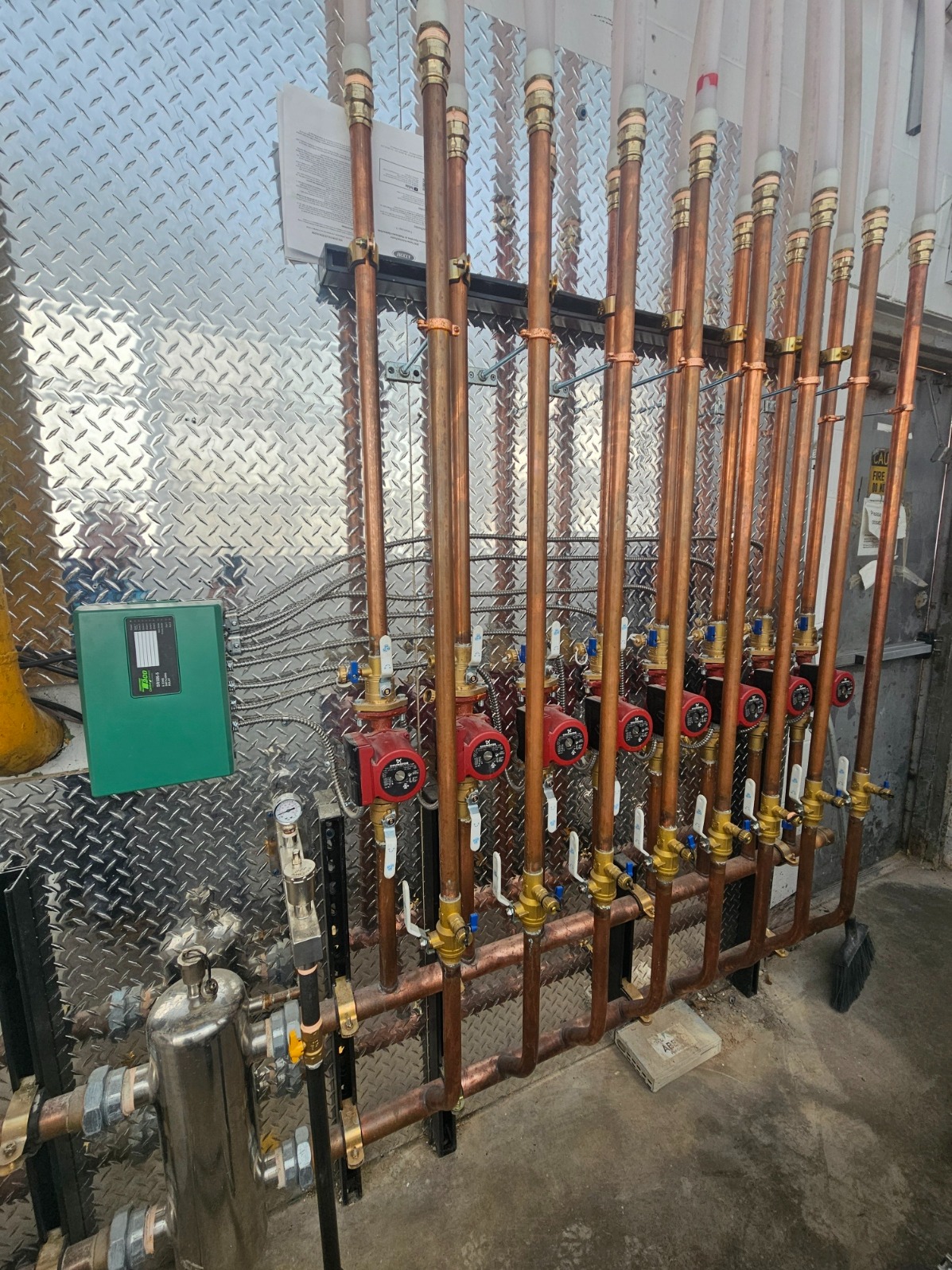
Most large commercial and residential buildings in Ontario use hydronic (hot water) heating — a system that circulates heated water through pipes to fan coils, baseboard heaters, or radiant floors in each unit. Understanding how this works is essential for property managers.
Key Components
- Boiler or heat exchanger: heats the water
- Circulation pumps: move water through the system
- Manifold: distributes water to individual zones or units
- Zone valves or balancing valves: control flow to each area
- Expansion tank: accommodates volume changes as water heats and cools
Two-Pipe vs. Four-Pipe Systems
Two-pipe systems use the same pipes for heating and cooling, requiring a seasonal switchover. Four-pipe systems maintain separate heating and cooling circuits, allowing simultaneous operation — important for buildings with varying occupancy and sun exposure.
Common Problems
- Air locks causing no-heat complaints in upper floors
- Unbalanced flow leading to hot and cold spots
- Pump seal failures
- Expansion tank waterlogging